DOES MY THERAPIST EVER THINK ABOUT ME OUTSIDE OF TREATMENT?
Where did the idea of Halloween come from? How old is this holiday? When did it first come into being? It has a long history.Among the ancient Celts, Halloween was a time of year when it was believed that the threshold of the spirit world was opened for spirits to pass through and haunt the living.
I dedicate this Halloween post to the patients who have left therapy. Why? Because Halloween is about remembering the past, saying goodbye to summer, going into winter., and much more depending on what traditions you study. So when a patient leaves therapy, it is also about the therapy relationship undergoing a change from a symbolic summer, to a symbolic winter, summer meaning a time of growth and warmth (the therapy relationship) and winter a time of hibernation, or death (for the literal therapy relationship, therapy in a concrete practical sense).

Somebody once asked me how I feel when a patient quits treatment???
And for me, the answer is kind of mixed-
When somebody quits by text or email without any chance really to say goodbye or explore why they’re quitting, it can be hard-I always prefer to meet in person and have one last session to go over all the progress someone made in the time we had together, but many patients decide to quit by themselves, and prefer to end therapy on their own terms, with less discussion. Any way it's done, by text, email or even one last session, the end for me is sort of like seeing a movie and having to leave either before it really got started ,or halfway through ,depending on how long the relationship was-Maybe I could say it is also like reading a book and just reading the preface of the introduction maybe reading a few chapters maybe almost getting to the end and all of a sudden the story is interrupted by the quitting-
So honestly, it’s never really pleasant, and yet on another level, I also appreciate if someone wants to take care of themselves that way and is honest with me about wanting to end. Even without a reason, I appreciate and respect that people follow their hearts, and by telling me they are leaving they are respecting me. I see quitting as the patient asking me to be patient and to give them some space and time ,to try out a new therapist, or try out not coming in at all and just having time to themselves that they weren’t having before. Certainly finances are always in there too, and most people prefer to not spend money to spending it, so I get it in some ways -
And of course I wouldn’t be a psychoanalyst if I had not also had a therapist along the way, so I also know what it’s like to be on the end of the quitting and that has never been easy either .That experience, of my ending my own therapy, has never been fun. I don’t like leaving somebody I’ve gotten to know and who knows me, and that i have come to depend upon. Leaving has sometimes been an agonizing decision.
So I feel for my patients when they decide to leave, and for that reason, I also try to just look at it as another stage in our sacred connection. After somebody leaves I still think of them, I’m curious about them, I still care about them. I just care in a different way now, instead of explicitly visiting with them each week or every other week, I just visit them in my heart. I hold space for the possibility that we may or may not meet again in this world. Part of what I love about the job is that I get a sense of somebody’s spirit and spirits never die, just like the unconscious is timeless. So in that sense, it’s a wonderful job, because whether somebody is with me in person -in front of me or on the virtual screen - has said goodbye or not-I feel like on some cosmic level we’re still connected somehow. I’m always really grateful for the fact that the patient came to me in the first place!! I so appreciate that they had the courage to let me try to get to know them, and gave me the opportunity to know another soul on this planet.
Back to why in a Halloween post, I am talking about patients who leave, is because Halloween is a time for remembering, sometimes haunting, where the boundary between the living and the dead, symbolically and literally, is more porous, and the veil between living and dying is thin. Halloween has both pagan and religious roots. Among the ancient Celts, Halloween was a time of year when it was believed that the threshold of the spirit world was opened for spirits to pass through and haunt the living. People marked the occasion by lighting bonfires for protection and dressing as the spirits and creatures they believed could cross over that night. Sound familiar?
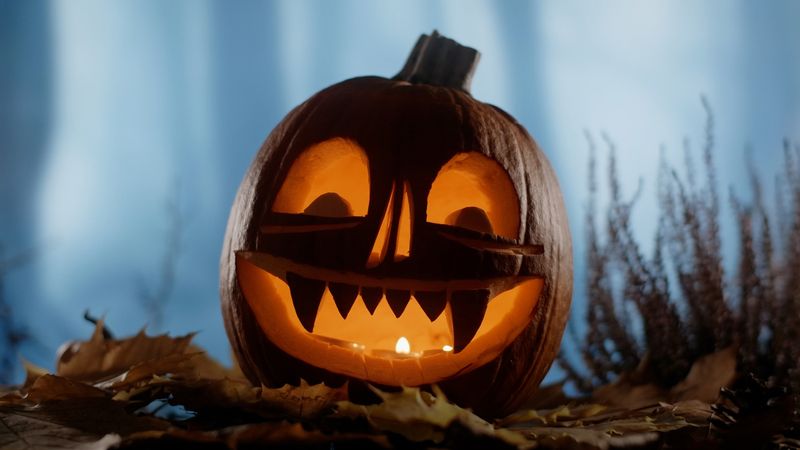
Halloween is believed to have connections to the festival of Samhain among the Celts of ancient Ireland.
It was a common belief that, on the eve of Samhain, I repeat, that the boundary between the worlds of the living and the dead blurred, and spirits could roam on earth. It was held that the souls of those who had died returned to visit their homes and those who had died during the year journeyed to the otherworld.
When the Romans conquered the Celts, they added their own touches to the Samhain festival, such as making centerpieces out of apples and nuts for Pomona, the Roman goddess of the orchards.
But where does the Christian aspect of the holiday come into play? In 835, Pope Gregory IV moved the celebration for all the martyrs (later all saints) from May 13 to November 1. The night before became known as All Hallow’s Eve. Eventually the name was shortened to the current Halloween. On November 2, the Church celebrates All Souls Day.
The purpose of these feasts is to remember those who have died, whether they are officially recognized by the Church as saints or not. It is a celebration of the communion of saints, which reminds us that the Church is not bound by space or time.
And so Happy Halloween to all my patients, the ones I still get to see on a regular basis, and the ones who have passed into the world without our meeting regularly at the moment. I wish you well!
